





IT’s A WRAP
2026 put pressure on food and beverage businesses to protect margins, maintain production efficiency and respond to increasingly cost-conscious consumers. But which challenges genuinely changed how the industry operates, and whichtrends failed to translate into commercial results?
This year-end feature will look beyond the headlines to assess how manufacturers managed input costs, supply-chain constraints and changing consumer demand. It will examine how affordability influenced pricing, pack sizes and product development, where businesses continued to invest despite cost pressures, and which strategies delivered measurable results. What defined your business’s year, and what will you do differently in 2027? Share your perspectives with us.
2027’s PROCESSING TRENDS
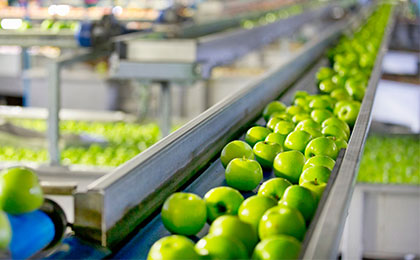
For South African food and beverage manufacturers, processing investment must deliver more than new technology. It needs to improve throughput, consistency,
resource efficiency or product quality while addressing capital constraints, skills shortages and production downtime.
FBR examines where automation, intelligent process control, predictive maintenance and flexible production systems can deliver measurable operational gains. It will consider how energy and water constraints are influencing equipment decisions, whether automation can improve output without adding unnecessary complexity, and how smaller manufacturers can modernise existing lines without major capital expenditure. The central question is which investments offer a realistic return under local operating conditions. Have you upgraded a production line or introduced new processing technology?
Share your insights with us.
INGREDIENT TRENDS
Not every global ingredient trend makes commercial sense in South Africa. In 2027, manufacturers will need to weigh demand for protein, fibre, functional ingredients and simpler formulations against cost, availability, technical performance and the need to substantiate product claims. In this feature we identify ingredient innovations with potential in the local market and explore what is driving investment in particular ingredients, how nutritional priorities and clean-label expectations are influencing reformulation, and whether locally available raw materials can offer viable alternatives to imports. The focus will be on which innovations can deliver the right balance of functionality, affordability and consumer acceptance—and which remain difficult to commercialise. Tell us what you are seeing in the market.

WHAT’S NEXT IN FOOD SAFETY
Food safety systems are only as effective as their ability to prevent failures, detect emerging risks and support a rapid response. For South African manufacturers, the challenge is to strengthen controls across increasingly complex supply chains while maintaining production efficiency and meeting regulatory responsibilities.
We examine which risks are proving hardest to identify before products reach consumers, and how environmental monitoring, rapid testing and digital traceability can improve prevention and incident response. We also assess the role of AI and predictive technologies, including the importance of reliable data, validation and human oversight. Alongside these developments, the article will consider whether the greatest vulnerabilities lie in supplier management, equipment, processes or the consistent execution of food safety procedures. What is the most urgent food safety challenge facing the sector, and which practical intervention would make the biggest difference? Contribute your expert perspective.
CONTACT US TODAY TO FIND OUT MORE


MULTIPACKS & BUNDLING
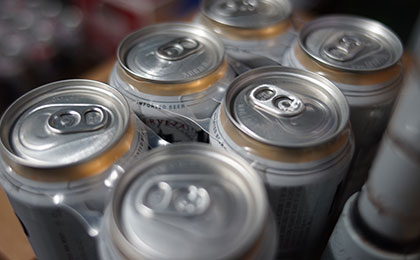
Multipacks and bundles can support affordability, promotions and retail visibility, but their commercial value extends beyond the consumer-facing offer. Pack configuration affects material consumption, line speed, changeover times, warehouse handling, pallet utilisation and transport costs. But what driving demand for multipacks and bundles across South Africa’s food and beverage categories, and how different formats influence production efficiency and total packaging cost?
We examine where automation can improve throughput and reduce material waste, how manufacturers can accommodate changing promotional requirements, and whether alternative formats can balance pack stability, retailer needs and distribution efficiency.
The focus will be on the conditions under which multipacking becomes a genuine commercial advantage rather than an additional cost. Share your knowledge with our readers.
PET
Modified atmosphere packaging (MAP) can extend the shelf life of suitable foods, but its performance depends on the interaction between gas composition, packaging materials, seal integrity, product characteristics and temperature control.
In this technical feature, we examine which food categories offer the strongest opportunities for MAP in South Africa and how gas mixtures and film specifications affect product quality and shelf life. We consider the validation required to demonstrate food safety, the risks associated with inadequate temperature control, and how manufacturers can assess the return on investment through reduced spoilage, longer distribution windows and fewer product returns. The aim is to establish where MAP offers a genuine commercial advantage and what manufacturers must get right to realise it. If you manufacture, specify or test MAP solutions, share your technical experience with us.

